
|
 | AI for the Rest of Us One Thing I Learned |
|
| |
 |
| |
| This week I watched a talk by Jediah Katz, an engineer who builds the systems that run AI agents. He put it in one line: the system around the model is "like the eyes and the hands for the model." |
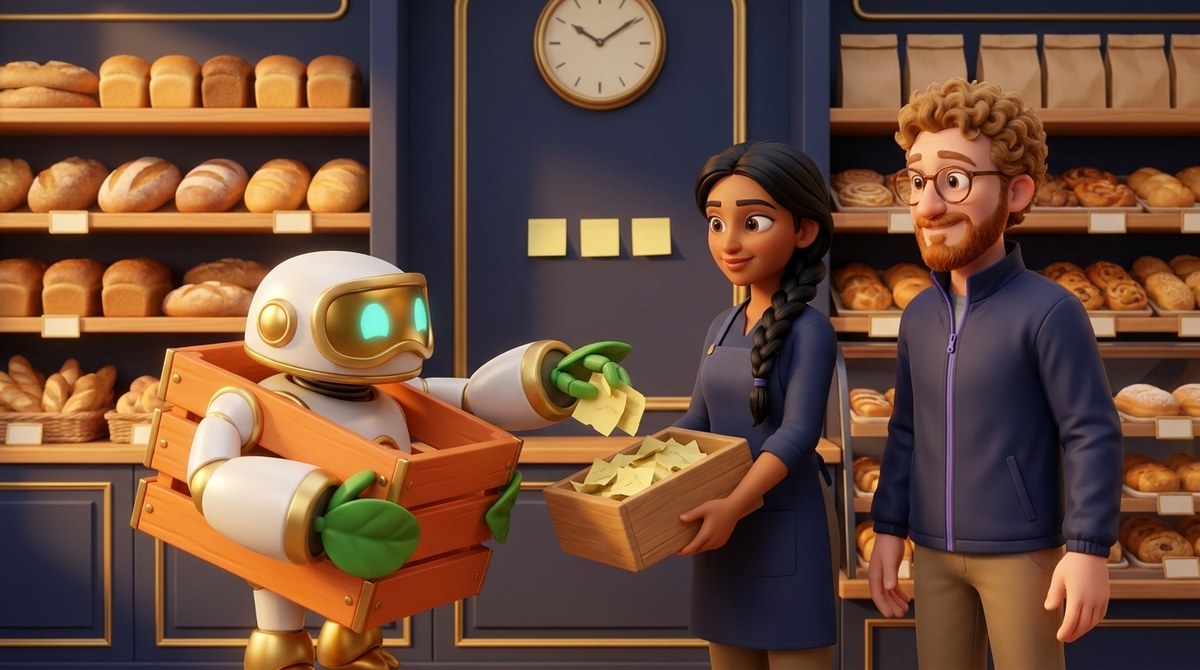
| Remember the bakery helper with the notebook from last week? Let's go back to her. |
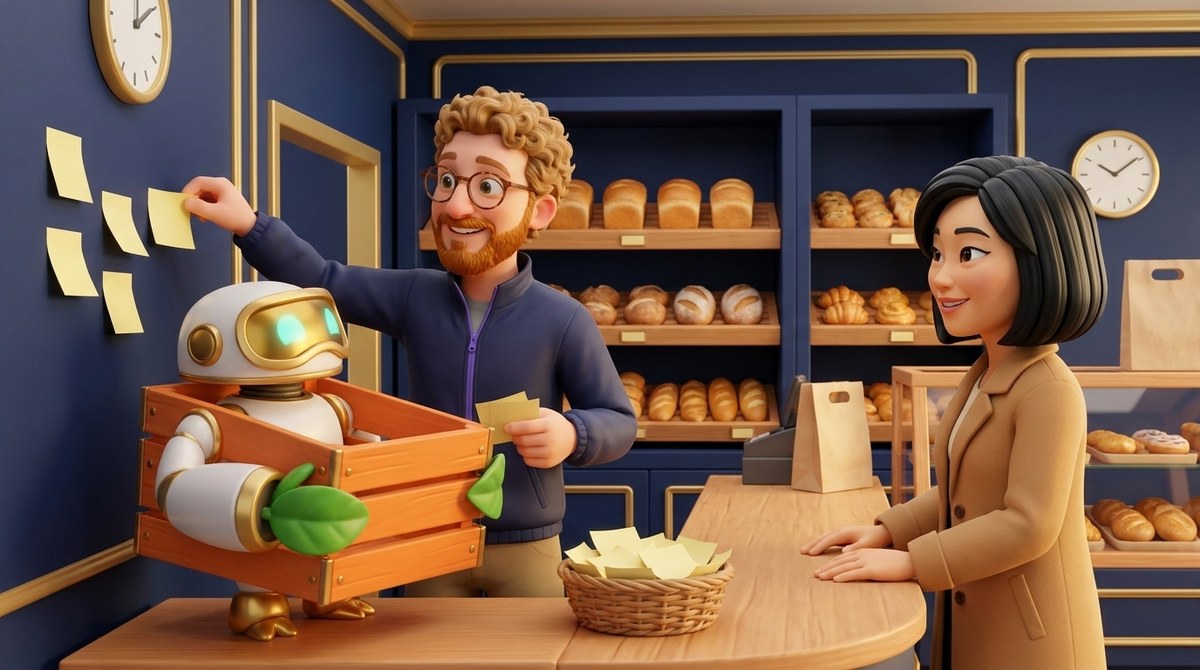
| When she started, you taped notes everywhere. "Check the oven at 7." "Spatula goes in the left drawer." "Ask before you open a new bag of flour." She needed every one of them. |
| Now she's been with you a while, and she's better. She checks the oven without a note. She finds the spatula. Most of your sticky notes can come down. |
| That is happening with AI right now. The models are getting smarter, and a lot of the instructions we used to write for them aren't needed anymore. |
| But three things never come down, no matter how good she gets. |
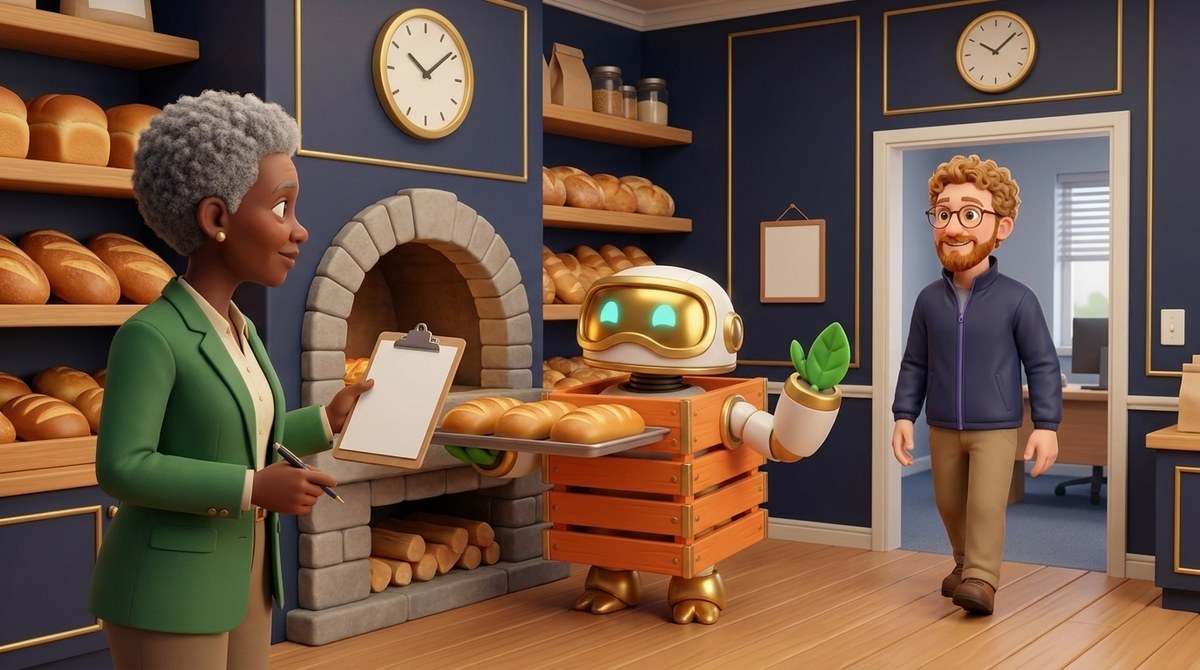 |
1. What she's allowed to do without asking. She can bake on her own. She does not sign a new supplier contract on her own. You decide where the line is, and you write it down. The fix: for every job you give your AI, write one line: what it may do alone, and what it must ask you first. |
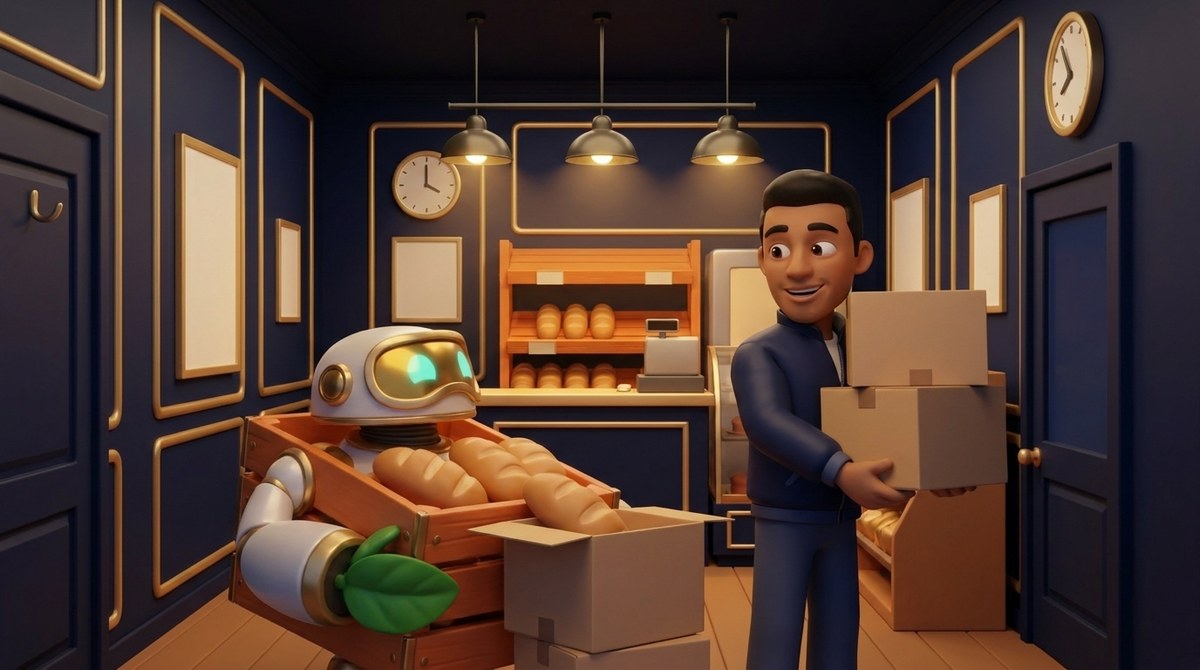 |
2. A place to work that stays open. If her station closes every time you leave the room, she can only work while you're watching. Real help keeps working when you've gone home. The fix: put the work your AI does every week on a schedule, not in a chat you have to remember to open. |
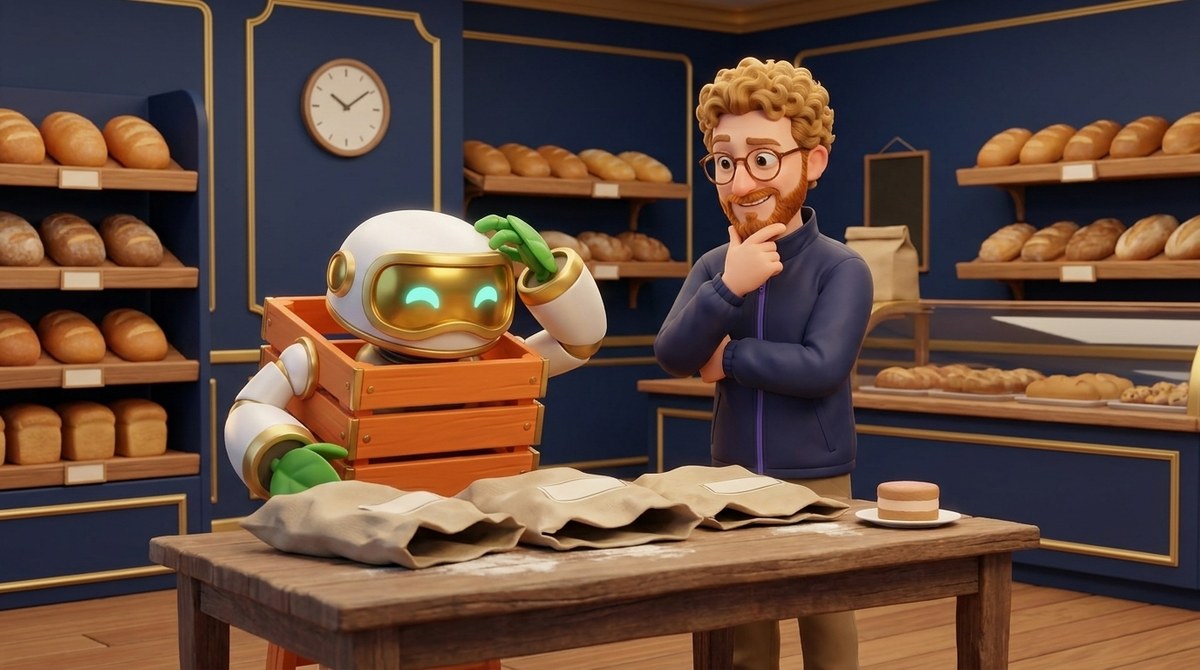 |
3. What it costs. A great helper who uses three bags of flour for one cake is still expensive. Smart and wasteful is still wasteful. The fix: once a month, look at what your AI spends, and cut what isn't earning its place. |
 |
And one habit that keeps the kitchen clean: when she stops making a mistake, take that sticky note down. Old notes that nobody needs just slow her down. |
| Allowed to do. A place to work. What it costs. Take the old notes down. |
| Here's the part that matters most. A smarter helper doesn't mean you need fewer people. It means the people you have stop doing the helper's job and get back to their own: the craft, the judgment, the customers. Someone still decides what the helper is allowed to do. That's not the machine's job. That's yours. |
| Want to talk about your business? |
|
|
| How about you? | | › | What is your AI allowed to do today without asking you first? | | › | What does it do only when you remember to open a chat? | | › | Do you know what your AI costs you each month? | | › | Which of your old instructions could come down now? |
|
| So this week, ask yourself: what are the sticky notes in my business that never come down? |
| Written with Claude, my AI assistant. |
| |